Unveiling Hollywood's Hidden History: 15 Fascinating Celebrity Facts
Hollywood has spent more than a century transforming performers into household names, with countless stories behind its biggest stars that rarely make it into movie biographies. These tales often involve unexpected career milestones or the strange beginnings of landmarks that are now inseparable from the film industry. The history is filled with moments that sound almost made up, yet they are all true.
For instance, when the iconic Hollywood Sign was erected in 1923, it originally read HOLLYWOODLAND, serving as an advertisement for a new housing development in the Hollywood Hills. This sign has since become a symbol of the entertainment industry, but its origins are rooted in real estate.
Beyond the Credits
Words from our Sponsor.
Austrian-born actress Hedy Lamarr was not just a Hollywood star; she was also an inventor. During World War II, she developed a frequency-hopping communication system with composer George Antheil, a technology that would later contribute to modern wireless communication.
On February 27, 1935, child star Shirley Temple made history by receiving a special Juvenile Academy Award at just six years old. This miniature trophy recognized her outstanding contribution to screen entertainment during 1934, a year in which she starred in six films. To this day, she remains the youngest performer to receive an Oscar.
Walt Disney holds the record for the most Academy Awards won by an individual, with 22 competitive Oscars to his name and a staggering 59 nominations throughout his lifetime. His achievements are particularly remarkable considering his career was primarily built around animation and film production.
The first movie made entirely in Hollywood was "In Old California" (1910), a short silent film directed by D. W. Griffith. Although filmmakers had visited the area prior to this, it was this production that marked Hollywood's emergence as the movie-making capital of the world.
On April 13, 1964, Sidney Poitier became the first Black man to win the Academy Award for Best Actor for his role in "Lilies of the Field" (1963). His nomination for "The Defiant Ones" (1958) had already made history as he became the first Black actor nominated in that category.
Hattie McDaniel made history at the 1940 Academy Awards when she won Best Supporting Actress for "Gone with the Wind" (1939), becoming the first Black person to win a competitive Oscar. Unfortunately, due to the segregated venue, McDaniel and her guest were seated separately from the other nominees, highlighting the racial tensions of the time.
Trailblazers in Award History
Rita Moreno completed her EGOT in 1977 when she won an Emmy for her appearance on "The Muppet Show." She had already won an Oscar for "West Side Story" (1961), a Grammy for "The Electric Company Album," and a Tony for the Broadway production of "The Ritz."
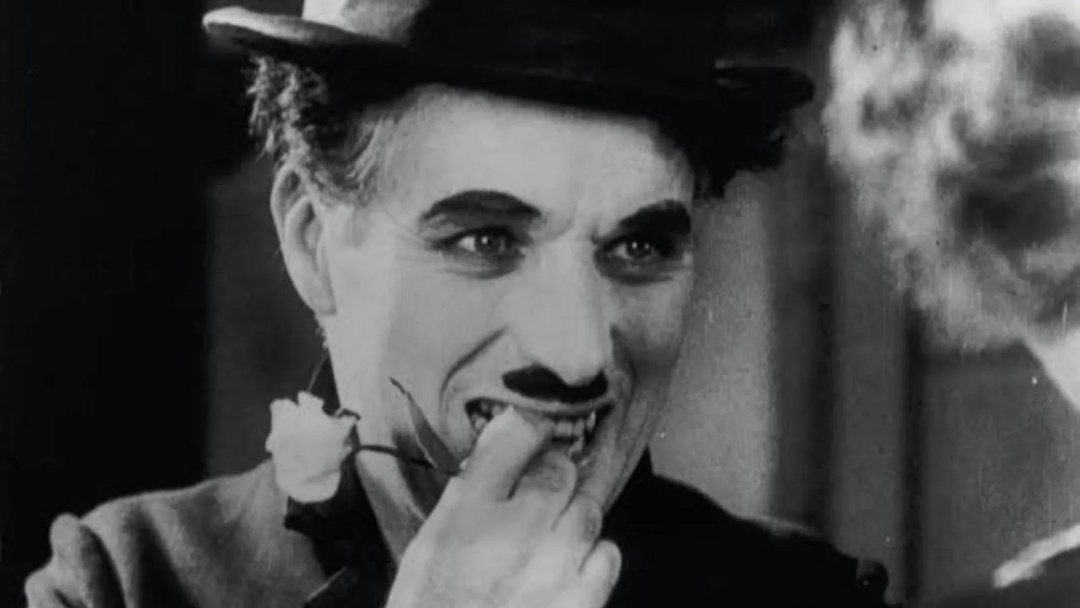
Charlie Chaplin was nominated in multiple competitive categories for "The Circus" (1928), including acting, writing, and directing. However, the Academy removed him from those categories and instead awarded him a special honor for his overall work on the film at the very first Academy Awards in 1929.
The inaugural Academy Awards ceremony took place on May 16, 1929, at the Hollywood Roosevelt Hotel in Los Angeles, attended by only 270 people, mostly Academy members. Interestingly, winners had already been announced three months prior to the event, a practice that has since changed.
At the first Academy Awards, Janet Gaynor won Best Actress for her performances in three separate films: "7th Heaven" (1927), "Street Angel" (1928), and "Sunrise" (1927). This unique format allowed the Academy to recognize multiple performances by the same actor within a single award category.
The first Academy Award for Best Picture went to "Wings" (1927), a silent war film directed by William A. Wellman. It remains the only completely silent film to win the category, notable for its enormous budget of approximately $2 million, making it one of the most expensive movies of its time.
The famous MGM lion logo has featured several different animals throughout its history. The first lion, named Slats, appeared in 1924 during the silent-film era, and audiences never heard him roar. This changed with Jackie, the second MGM lion, whose recorded roar was introduced in 1928 alongside the studio's early sound productions.
The Final Take
James Dean tragically died in a car accident on September 30, 1955, at just 24 years old. Despite his brief career, he received two posthumous Academy Award nominations for Best Actor: one for "East of Eden" (1955) and another for "Giant" (1956), making him the actor with the most posthumous Oscar nominations in that category.
The iconic Oscar statuette was designed by MGM art director Cedric Gibbons in 1928, with sculptor George Stanley being paid just $500 to create the physical trophy. The original design featured a knight holding a crusader's sword while standing on a reel of film, a striking image that has become synonymous with cinematic achievement.