The EU's Bureaucratic Economy: A Critical Examination
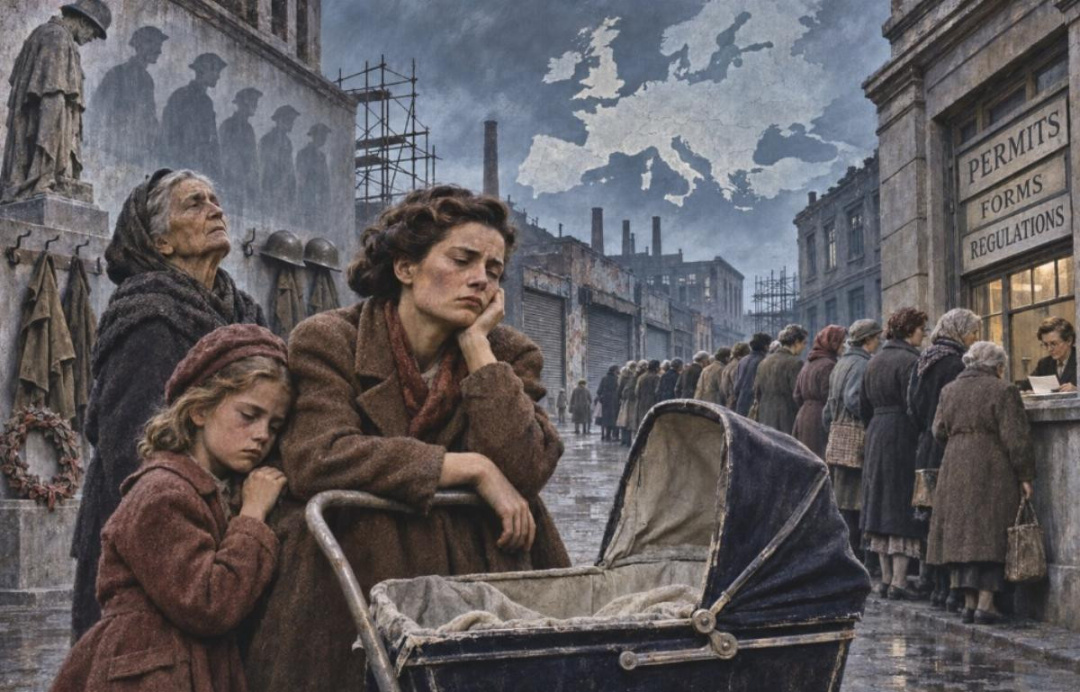
The European Union's economy has increasingly come under scrutiny for its bureaucratic inefficiencies and reliance on soft socialism. This analysis delves into how the historical context of the two World Wars has left a lasting impact on Europe's economic vitality, leading to a system that many argue is more about maintaining the status quo than fostering genuine growth.
The aftermath of World War I marked the beginning of Europe's decline, with millions of young men lost to the war, leaving a demographic void that would haunt the continent for generations. The United States played a pivotal role in ending the conflict, but the societal and economic repercussions were profound. The war's toll on the population stunted growth and innovation, setting the stage for a reliance on government intervention as families struggled to rebuild.
Beyond the Credits
Words from our Sponsor.
World War II compounded these challenges, with an even greater loss of life and further destruction of infrastructure. The post-war baby boom offered a glimmer of hope, but it was overshadowed by the realities of a continent still grappling with the consequences of its past. As Europe sought to recover, it increasingly turned to socialist policies, which many believe have stifled economic dynamism.
A recent viral tweet encapsulates the essence of this bureaucratic malaise, illustrating how the EU's soft power operates through a system of certifications and compliance rather than tangible productivity. The tweet describes a scenario where a property owner pays for an EU eco-certificate, which involves planting trees and placing bees on rooftops—actions that, while environmentally friendly in theory, do not contribute to actual economic output. This highlights a critical flaw in the EU's economic model: the focus on appearances and compliance rather than real, measurable progress.
The Hidden Costs of Bureaucratic Compliance
The tweet's author points out that this cycle creates jobs within the bureaucracy but does not lead to meaningful improvements in society. Instead, it perpetuates a system where the true costs are borne by ordinary citizens, who face rising rents and taxes to support a structure that seems to exist primarily for its own preservation. The irony is stark: while the EU promotes itself as a progressive force, it often produces outcomes that are disconnected from the needs of its citizens.
As young couples weigh their financial futures, many are opting for smaller families, reflecting the economic pressures of living in a system that prioritizes bureaucratic compliance over genuine economic growth. The EU's approach, characterized by layers of regulations and certifications, often results in a hollow structure that appears robust on the outside but is fundamentally weak.
The Illusion of Progress
This illusion of progress is not just a European issue; it resonates globally as governments grapple with the balance between regulation and innovation. The EU's model serves as a cautionary tale about the dangers of allowing bureaucracy to overshadow the entrepreneurial spirit that drives economic success. As the continent faces ongoing challenges, it must reconsider its approach to governance and economic policy, focusing on fostering genuine growth rather than maintaining a façade of stability.
In conclusion, the European Union's economic struggles highlight the complexities of governance in a post-war context. As history has shown, the reliance on bureaucratic structures can lead to stagnation, and the EU must navigate these challenges with a renewed focus on innovation and real-world productivity. Only then can it hope to revitalize its economy and secure a prosperous future for its citizens.