North Korean Cyber Actors Target 30,000 Devices in Contagious Interview Scheme
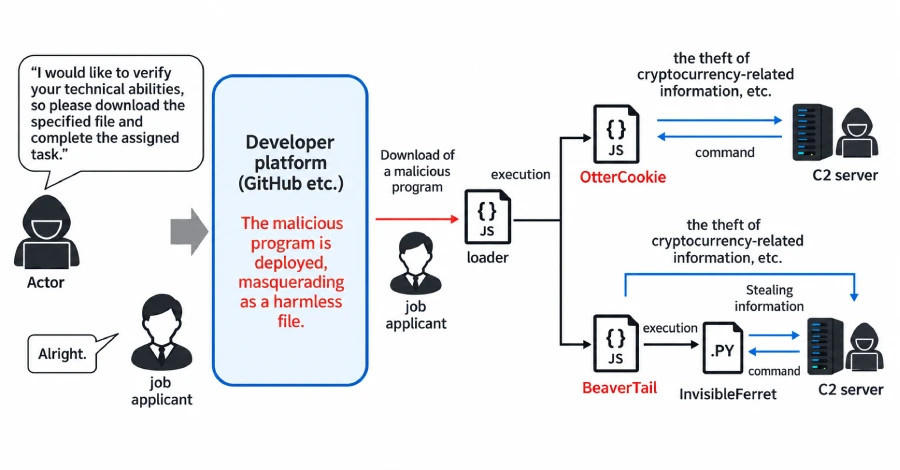
The Contagious Interview campaign, orchestrated by North Korean threat actors, has compromised at least 30,000 devices in over 100 countries, leading to the theft of funds and account credentials from more than 7,000 cryptocurrency wallets. This alarming statistic comes from a joint cybersecurity advisory issued by agencies from Japan, the U.S., Australia, and Germany, shedding light on the extensive reach and impact of this cyber operation.
The campaign primarily targets web designers, engineers, and specialists in cryptocurrency, blockchain, and Web3 technologies. Victims have reportedly lost at least $10.71 million in cryptocurrency, underscoring the financial implications of these cyber attacks. The advisory details the methods employed by the attackers, who infiltrate the networks of unsuspecting job seekers by posing as potential employers and recruiters on platforms such as LinkedIn.
Beyond the Credits
Words from our Sponsor.
Once a connection is established, the threat actors instruct their targets to complete job assessments or coding tests. This process initiates a multi-step infection chain that leads to the deployment of various malware families, including BeaverTail, InvisibleFerret, FlexibleFerret, and others. These malware variants provide the attackers with backdoor access to the victims' systems, allowing for persistent access and data exfiltration.
The advisory also highlights the involvement of specific cyber threat groups, including WaterPlum and PurpleDelta, which are believed to operate under the auspices of North Korea's 313 General Bureau of the Munitions Industry Department. These groups are known for their sophisticated operations, often using the same IP addresses to access laptop farms and apply for positions at Japanese cryptocurrency exchanges.
In addition to direct theft, successful infections enable these actors to infiltrate organizations employing targeted developers, facilitating espionage and intellectual property theft. The advisory notes that stolen identification images can be used by North Korean IT workers to impersonate victims and generate foreign currency.
The Evolution of Cyber Recruitment Tactics
The Contagious Interview campaign is not a new phenomenon; it has been active since at least 2022. The use of AI to create fictitious identities for job recruitment scams has become a hallmark of this operation, reflecting a broader trend in North Korea's cyber strategies. The IT worker scheme, which dates back to the 1960s and 1970s, has evolved to generate illicit revenue for the regime by employing false identities to secure jobs in Western companies.
As the cyber threat landscape continues to evolve, the advisory emphasizes the need for vigilance among tech professionals. The primary targets of these attacks appear to be individuals in the U.S. and Japan, with the threat actors utilizing VPN services to mask their activities. The implications of this campaign extend beyond immediate financial loss, posing significant risks to corporate security and national interests.
The ramifications of the Contagious Interview campaign highlight the intersection of cybersecurity and international relations. As North Korea increasingly relies on cyber operations to fund its regime, the global community must remain alert to the tactics employed by these actors. The advisory serves as a crucial reminder of the importance of cybersecurity awareness and the potential threats posed by state-sponsored hacking efforts.
Cue the Credits
With the rise of remote work and digital communication, the vulnerabilities in hiring processes have become more pronounced. Organizations must implement robust security measures to protect their systems and personnel from such sophisticated attacks. The ongoing evolution of cyber threats necessitates a proactive approach to cybersecurity, ensuring that individuals and companies are equipped to defend against these emerging risks.
In conclusion, the Contagious Interview campaign exemplifies the growing sophistication of cyber threats in today's interconnected world. As North Korean actors continue to exploit vulnerabilities in the tech industry, it is imperative for professionals and organizations to stay informed and vigilant. The advisory underscores the need for comprehensive cybersecurity strategies to mitigate the risks associated with these malicious activities.