Bolsonaro's Comments on Patron Saint Spark Controversy in Brazil's Elections
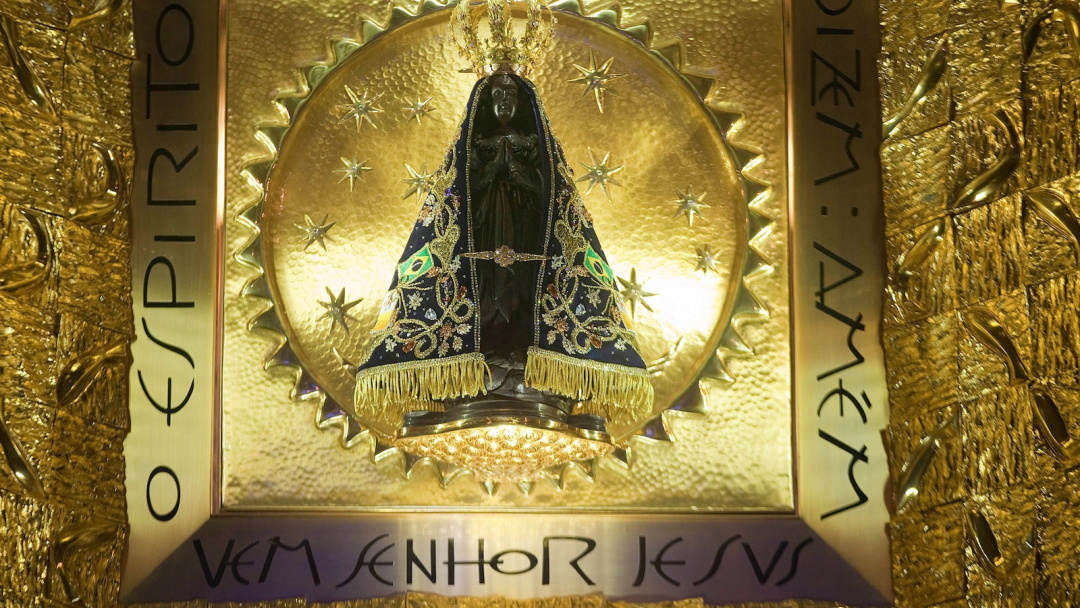
In the lead-up to Brazil's presidential elections, a comment made by Sen. Flávio Bolsonaro has unexpectedly thrust the nation's patron saint, Our Lady of Aparecida, into the spotlight. With the election scheduled for October 4, this controversy has sparked fears among many Catholics about the potential removal of the revered figure from her position as the country's spiritual symbol.
The comment, made during an August 23 video, where Bolsonaro stated he would "declare that Brazil belongs to the Lord Jesus Christ," was interpreted by some as a threat to the status of Our Lady of Aparecida. Bolsonaro's main rival, incumbent Luiz Inácio Lula da Silva, and his supporters have amplified these fears, suggesting that Bolsonaro's remarks could signal a shift away from the Catholic identity that many Brazilians hold dear.
Beyond the Credits
Words from our Sponsor.
Bolsonaro, the son of former president Jair Bolsonaro and a prominent Evangelical figure, has dismissed the accusations as "the biggest fake news of the campaign." He insists that he has never advocated for the removal of Our Lady of Aparecida and that his remarks were intended to symbolize a spiritual commitment rather than a political agenda.
The controversy has intensified the role of religion in the election, particularly in a country where approximately 56.7% of the population identifies as Catholic and 26.9% as Evangelical, according to a 2022 census. Polls indicate a tight race between Bolsonaro and Lula, with the possibility of a runoff election if no candidate secures an outright majority.
The origins of the controversy trace back to a 2007 legislative proposal by Bolsonaro's ally, Victório Galli, which aimed to remove Our Lady of Aparecida's designation as patron saint. Although the bill was never passed, it has resurfaced in discussions surrounding Bolsonaro's candidacy, adding fuel to the fire of public concern.
Bolsonaro's Accusations and Religious Tensions
At a campaign event, Bolsonaro accused the National Conference of Brazilian Bishops (CNBB) of colluding with Lula's Workers' Party to spread misinformation. The CNBB has since refuted these claims, stating, "a lie cannot be fought with another lie."
Analysts suggest that the viral nature of this controversy reflects deeper anxieties among Catholics about the growing influence of Evangelicals in Brazilian society. Over the past three decades, the percentage of Evangelicals in Brazil has nearly tripled, raising concerns that this demographic shift could lead to the erosion of Catholic cultural symbols.
As the election approaches, the implications of this controversy could significantly impact Bolsonaro's campaign, particularly among Catholic voters. Political analysts believe that the fallout from this incident could influence voter sentiment, although the extent of this impact will only be clear on election day.
One Last Look
In a related development, Lula has indirectly referenced the controversy in his campaign, assuring supporters that he will protect the legacy of Our Lady of Aparecida as long as he remains in office. Meanwhile, Bolsonaro's legal team has filed complaints with electoral authorities regarding the spread of rumors about his stance on the patron saint.
With the electoral landscape shifting rapidly and tensions rising, the controversy surrounding Our Lady of Aparecida serves as a reminder of the potent intersection of faith and politics in Brazil. As the nation prepares to vote, the outcome remains uncertain, but the stakes have never been higher for both candidates.