For eleven years, Mara Venn had been raising the East Span, a pedestrian bridge over the dry freight basin, linking the old apartments to the new clinics. She had designed its ribs to flex during earthquakes and its deck to gather rainwater for trees below. Now only the western railings remained unfinished, yet each morning she walked beneath the span feeling less like its maker than its prisoner. Every bolt knew her hands.
The city postponed the opening again. A committee wanted cheaper lamps, contractors wanted payment, and residents wanted to know whether the bridge could bear a wedding, a marching band, or only groceries. Mara answered politely, then slept in the site office. Her brother Teo, who had hauled steel from the first foundation, had stopped asking when she planned to come home.
The invitation arrived in a paper envelope sealed with blue clay. Sella Or, a surveyor Mara had known before the bridge swallowed her life, wrote that cracks had appeared beneath the district. The city might need to move several blocks before the ground shifted. A maintenance crew was leaving in three days to inspect the abandoned Underway, a service road buried below the freight basin. They needed someone who understood load and strain. Six weeks, perhaps longer.
It was a practical offer, which made it difficult to refuse. If the Underway could be reopened, whole buildings might be moved safely instead of demolished. Mara assigned her unfinished work to younger engineers. Teo found her packing a coat, a wrench, and the bridge’s first pencil drawing. He put a jar of quince jam in her bag, the kind their mother had made before forgetting how to read labels.
“You always leave when the thing is almost done,” he said.
“This one is almost done because I stayed,” Mara replied, and heard how untrue it sounded.
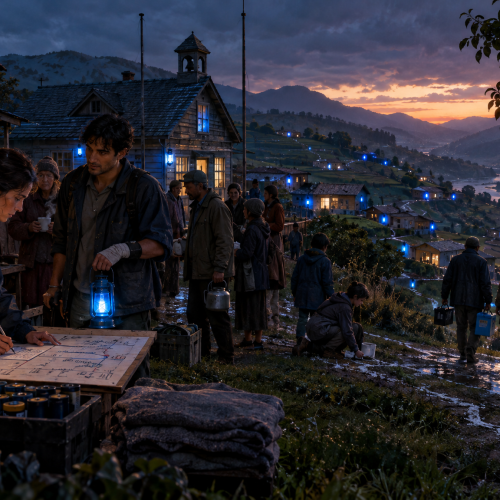
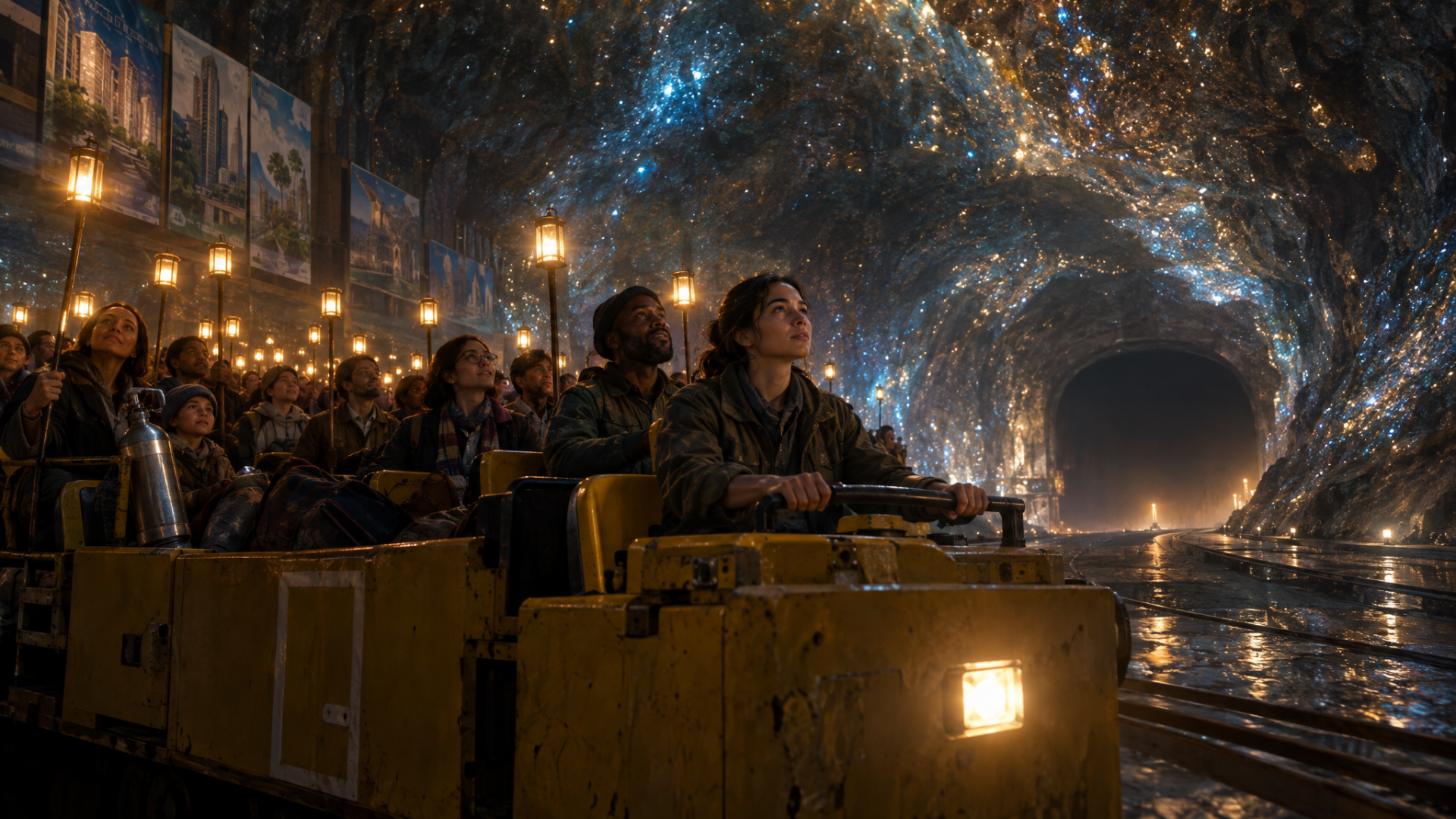
On the morning of departure, forty-three people gathered at the sealed ramp. The maintenance vehicle was a squat electric hauler with yellow seats and a drilling lamp. Children carried blankets. Shopkeepers carried ledgers. The clinic director brought oxygen tanks. Someone had painted a white door on the vehicle’s side, though no door was there. Mara had expected an inspection. Instead, she found a procession.
The hauler descended into a tunnel lined with advertisements for neighborhoods that had never been built. At first they discussed drainage, fuel, and the safest order for moving apartments. Then the tunnel widened. Mineral dust shone in the walls like buried stars. The lamp failed, but the road ahead continued to gleam—not brightly enough to call it light, not dark enough to dismiss. People began singing without choosing a tune. Their voices struck the ceiling and returned changed.
By dusk, the vehicle reached a chamber larger than the freight basin above. Rails crossed the floor toward a black opening where warm wind rose. Sella said they belonged to an ancient transport system. The clinic director said they were cracks. A child announced that the city was growing roots. No one corrected her.
The maps showed distances that changed when folded, and the instruments disagreed about whether they were descending or climbing. The crew could turn back, but the next tremor would close the route. Above them stood the bridge, the apartments, Teo, and every person who had measured Mara’s life in postponed meals. Ahead waited a road that might be infrastructure, geology, or a passage invented by frightened people who needed one.
Sella asked Mara to choose. She looked at the residents. Their faces held the terror of eviction, but also the dangerous brightness of an audience offered a stage. Mara took the control bar. Behind her, people fastened lanterns to poles and raised them like a ceiling of stars. Even the oxygen tanks became part of the display, silver and solemn.
The hauler rolled into the opening. Buried rails began to hum. Far away—perhaps in the city, perhaps inside the mountain—a deep series of knocks answered. The passengers cheered as if something immense had recognized them. Mara thought of Teo beneath the unfinished railings, holding the jar he had meant to give her. She could not tell whether the warm wind carried rain or the breath of a machine.
They traveled through the shining dark, not rescued and not yet lost. Behind them, those on the surface might finish the bridge, dismantle it, or make it a monument to the people below. Ahead, the lanterns formed a moving constellation, and every face within it looked briefly capable of beginning again.
Inspired by “Come Sail Away” — Styx.